
Ankle Fracture Physical Therapy: Avoid This Common Recovery Mistake
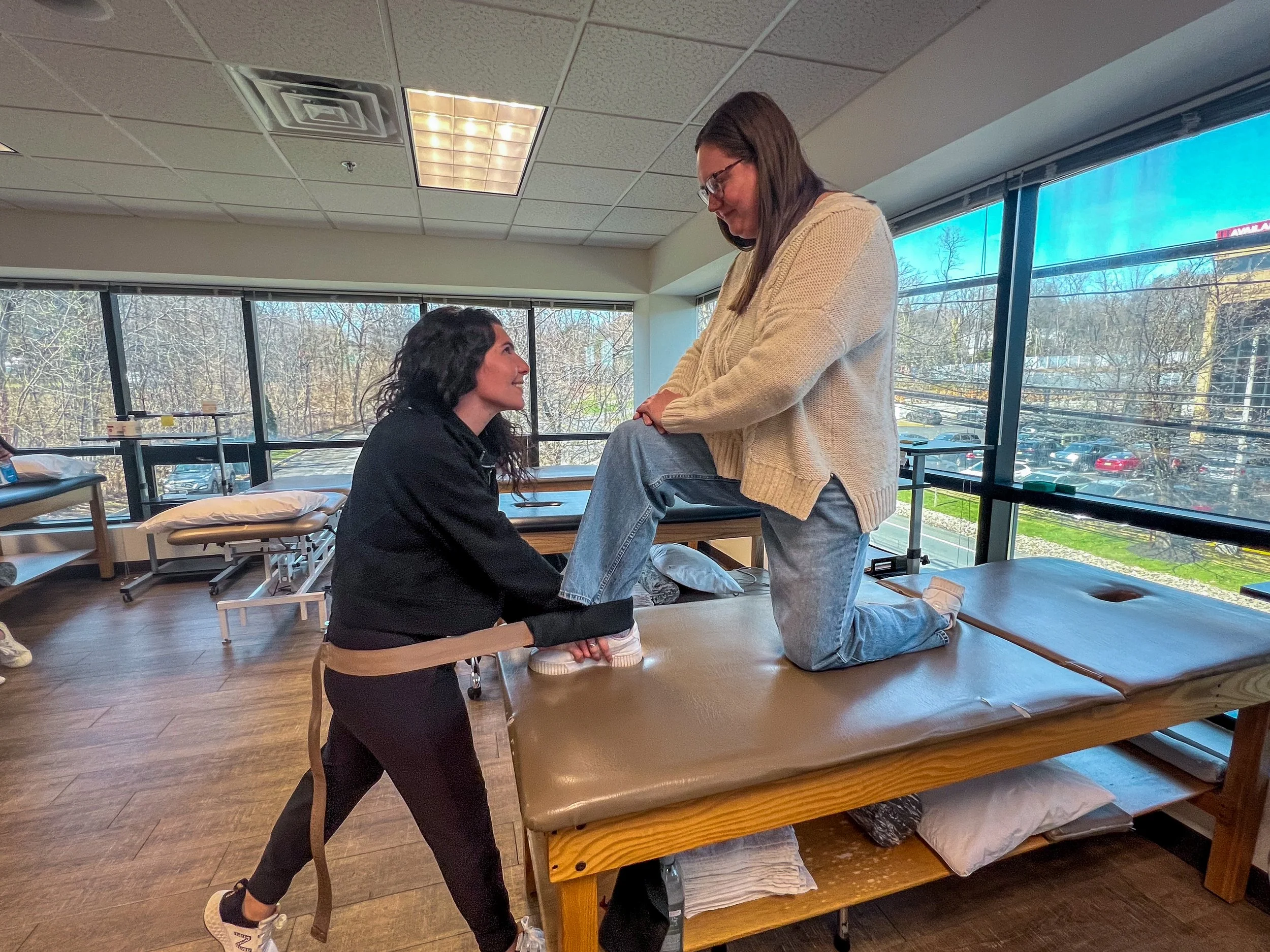
Ankle Joint Mobilization Technique
Being cleared to put weight on your ankle is an exciting milestone after an ankle fracture. After weeks in a cast, boot, or using crutches, most patients are eager to walk more, stand longer, return to work, and resume normal daily activities.
Unfortunately, this is also when I see one of the biggest mistakes in ankle fracture recovery:
Patients dramatically increase their walking and standing as soon as they are cleared for weight bearing.
By the end of the day, the ankle is significantly more swollen, stiff, and painful. That swelling then limits ankle mobility and makes it difficult to perform the strengthening exercises needed to improve walking tolerance. The patient is technically doing more, but the rehabilitation process may actually move more slowly.
The solution is not to avoid weight bearing. Weight bearing is an important part of recovery once your physician has cleared it. The key is to increase it gradually while rebuilding the strength—especially soleus strength—needed to tolerate more time on your feet.
Weight-Bearing Clearance Does Not Mean Unlimited Activity
When a physician says you may begin weight bearing, that decision primarily reflects the healing and stability of the fracture. It does not necessarily mean the ankle has regained the mobility, muscle strength, balance, or endurance required for hours of walking and standing.
After immobilization, the ankle and lower leg are usually deconditioned. The calf is weaker, ankle motion is restricted, and the tissues are not accustomed to managing normal daily loads. Going immediately from very little loading to a full day on your feet is a major workload increase.
Some increase in swelling can be expected as activity resumes. The problem is when the amount of walking and standing consistently creates enough swelling to interfere with the next part of rehabilitation.
How Too Much Weight Bearing Can Slow Ankle Fracture Rehab
Excessive walking or standing can create a frustrating cycle:
The patient is cleared to bear weight and rapidly increases activity.
The ankle becomes increasingly swollen, painful, and stiff.
The swelling limits ankle range of motion and makes exercise more difficult.
The patient cannot adequately perform the strengthening needed to improve load tolerance.
Because strength is not progressing, normal walking and standing continue to overload the ankle.
This is why more activity is not always better. The correct amount should challenge the ankle without creating a response that compromises mobility, exercise quality, or function later that day and the following day.
The Goal Is to Build Weight-Bearing Capacity
The goal of physical therapy is not simply to get you walking as quickly as possible. It is to increase how much walking, standing, and exercise the ankle can tolerate without repeatedly becoming overwhelmed.
Your physical therapist may help you adjust:
Total walking time
Time spent standing at work or home
Number of errands performed in one trip
Stair volume
Use of a boot, brace, crutches, or cane when medically appropriate
Planned sitting or elevation breaks
Exercise volume on higher-activity days
A graded approach allows the ankle to adapt. Activity can then be increased based on its response instead of assuming that clearance alone means the leg is ready for a full schedule.
Why Soleus Strength Matters After an Ankle Fracture
One of the most important muscles for regaining weight-bearing tolerance is the soleus, the deeper calf muscle underneath the gastrocnemius.
The soleus is highly active while standing and walking. It helps control the shin as the body moves over the foot, supports the ankle during the stance phase of walking, and contributes to forward propulsion. Because it works repeatedly whenever you are on your feet, soleus capacity is closely connected to how well the leg tolerates longer periods of weight bearing.
After immobilization, the calf can lose both strength and endurance. A patient may be medically permitted to walk but still lack the soleus capacity to manage a normal workday, shopping trip, or long period of standing.
In our clinical experience, soleus weakness is often one of the primary limitations when patients struggle to increase the duration of weight-bearing activity. This does not mean the soleus is the only factor. Fracture healing, swelling, ankle mobility, pain, gait mechanics, balance, and the strength of the rest of the leg also matter. However, soleus strength deserves specific attention rather than relying on walking alone to rebuild the calf.
How Do You Strengthen the Soleus?
Soleus-focused exercises are generally performed with the knee bent. The exact starting point depends on healing status, weight-bearing restrictions, pain, swelling, and current strength.
Exercises may progress through:
Seated bent-knee calf raises
Seated calf raises with external resistance
Supported bent-knee heel raises in standing
Loaded soleus raises
Single-leg soleus strengthening
Higher-volume strength-endurance work
Faster calf work and power training for running or sports
The exercise must be challenging enough to create an adaptation, but not so aggressive that it produces a major and lasting increase in symptoms. Simply performing a few easy heel raises may not provide enough stimulus to restore the capacity lost during immobilization.
A Better Ankle Fracture Rehabilitation Progression
At Summit Physical Therapy, ankle fracture rehabilitation is progressed according to the individual fracture, whether surgery was required, the physician’s precautions, and the patient’s goals.
1. Control Pain and Swelling
We identify which activities aggravate the ankle, what helps symptoms settle, and how much walking and standing the ankle currently tolerates. Treatment may include activity modification, swelling-management strategies, safe movement, and hands-on treatment when appropriate.
The objective is to keep the ankle calm enough that the patient can consistently work on mobility and strength.
2. Restore Ankle and Lower-Extremity Mobility
Time in a cast or boot frequently restricts ankle dorsiflexion—the ability of the shin to move forward over the foot. This can alter walking, stair descent, squatting, and later running mechanics.
Treatment may address motion at the ankle, foot, and toes as well as mobility at the knee and hip when needed. After surgery, scar mobility may also be addressed once the incision has healed and treatment is appropriate.
3. Normalize Walking and Rebuild Control
We help the patient gradually accept weight through the injured leg without limping or shifting away from it. Balance, foot control, and coordination are progressed alongside walking.
The goal is not merely to walk without an assistive device. It is to walk with a pattern and volume the ankle can tolerate.
4. Rebuild Soleus and Full-Leg Strength
Soleus strengthening is emphasized, but rehabilitation also addresses the gastrocnemius, foot and ankle muscles, quadriceps, hamstrings, hips, and trunk. This creates the strength needed for stairs, squatting, prolonged standing, and more advanced activity.
5. Measure Functional Strength
At Summit Physical Therapy, we use VALD strength-testing technology when appropriate to measure recovery objectively. Testing can identify differences between the injured and uninjured sides and help determine whether the patient is truly regaining the force-producing capacity required for the next stage.
This gives us better information than relying only on pain levels or the passage of time.
6. Restore Power
Strength is the ability to produce force. Power is the ability to produce that force quickly. Power becomes important for efficient stair climbing, reacting to a loss of balance, running, jumping, and athletic movement.
7. Reintroduce Impact and Change of Direction
Patients returning to running or sports must gradually rebuild the ability to absorb and produce force during hopping, landing, acceleration, deceleration, and cutting.
VALD Forcedecks can measure jumping and landing performance, including differences in how each leg produces and absorbs force. This helps guide return-to-running and return-to-sport decisions.
8. Build Endurance and Durability
Performing an exercise once is different from tolerating an entire day on your feet. Walking time, work demands, running volume, and practice duration must be progressed until the ankle can repeatedly handle the required workload.
9. Return to Your Specific Activities
The final stage should reflect what you actually want to do. A runner needs a graded return-to-running plan. An athlete needs sport-specific drills. Someone with a physically demanding job may need prolonged standing, carrying, lifting, climbing, and uneven-surface preparation.
How Do You Know If You Are Doing Too Much?
Your rehabilitation plan should include clear guidelines for interpreting symptoms. A mild, short-lived response may be acceptable as activity increases. A large or persistent increase in swelling, stiffness, pain, limping, or loss of motion may indicate that the current workload exceeds the ankle’s capacity.
Useful questions include:
Does swelling continue to build throughout the day?
Am I limping more as I walk longer?
Is my ankle significantly stiffer after activity?
Can I still perform my rehabilitation exercises well?
Have symptoms returned close to baseline by the following day?
These responses help determine whether activity should increase, remain the same, or temporarily decrease. New or concerning symptoms should be discussed with your physician or physical therapist.
The Bottom Line
Being cleared for weight bearing is the beginning of a progression—not the end of one.
The biggest mistake we see is doing too much walking and standing immediately after clearance. This can produce enough swelling to restrict motion and interfere with the strengthening required to tolerate more activity. The result is a cycle that can unnecessarily slow recovery.
A better approach is to gradually increase weight-bearing activity while deliberately rebuilding soleus strength, full-leg capacity, balance, power, and endurance. This allows the ankle to become more capable instead of repeatedly asking a deconditioned leg to tolerate more than it is ready for.
Ankle Fracture Physical Therapy in Union and Morris County, NJ
If you are recovering from a broken ankle or ankle surgery, Summit Physical Therapy can help you progress from protected weight bearing to confident walking, work, exercise, running, and sports.
We serve patients from Summit, Short Hills, Millburn, Maplewood, Chatham, Florham Park, New Providence, Springfield, and South Orange, New Jersey.
Ready to rebuild your ankle the right way? Contact Summit Physical Therapy to schedule an evaluation.