
Why a Dedicated Mentorship Program Matters for New Graduate Physical Therapists
Graduating from physical therapy school makes you a physical therapist. It does not mean you are finished learning how to be a great clinician.
The first few years of practice are where much of your clinical reasoning, communication style, treatment philosophy, and professional confidence are developed. The environment you choose for your first job can have a major impact on how quickly those skills grow.
That is why new graduate physical therapists should look beyond salary, productivity expectations, and benefits when comparing jobs.
Ask what the mentorship actually looks like.
Mentorship Should Be More Than “Ask Me If You Have Questions”
Many clinics advertise mentorship.
But mentorship can mean very different things.
Having an experienced therapist somewhere in the building who is willing to answer a question is helpful—but it is not the same as having a dedicated mentorship program.
New clinicians often don't know which questions they should be asking yet.
Structured mentorship creates regular opportunities to discuss difficult cases, review clinical reasoning, practice examination and treatment skills, and receive feedback before poor habits become established.
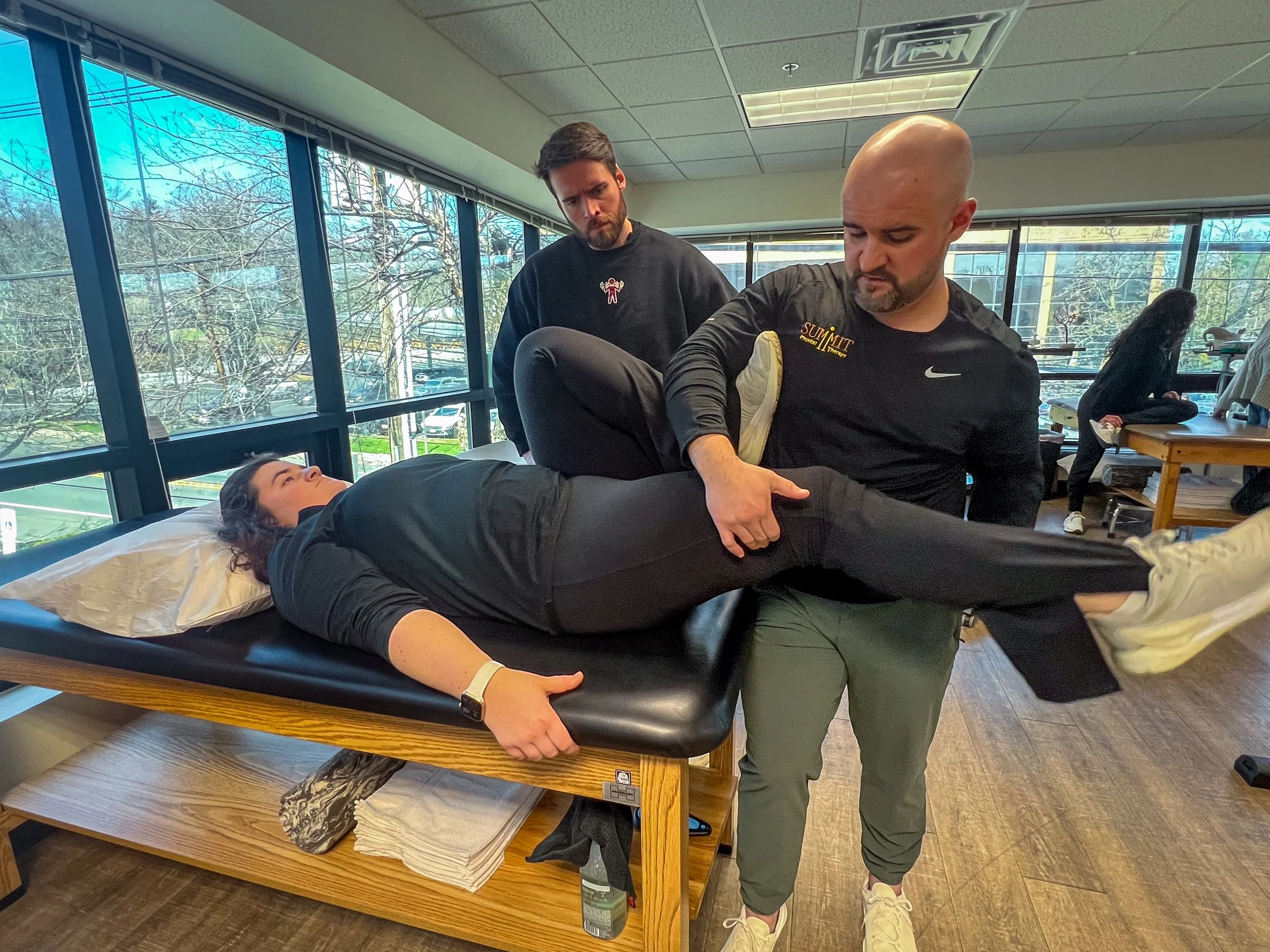
Manual Matters
The details make the difference in the quality of your care, your efficiency, and your repeatibility. Learn to test and learn to treat.
Clinical Reasoning Takes Repetition
One of the biggest transitions from PT school to clinical practice is learning to recognize patterns.
Early in your career, you may focus heavily on individual impairments: strength, range of motion, pain, mobility, balance, or motor control.
With experience, you begin recognizing how those findings fit together.
You start seeing different diagnoses that share similar underlying problems. You become better at deciding which findings actually matter and which ones probably don't.
That pattern recognition takes hundreds and eventually thousands of patient encounters.
A good mentor helps accelerate the process by allowing you to borrow from their experience while developing your own.
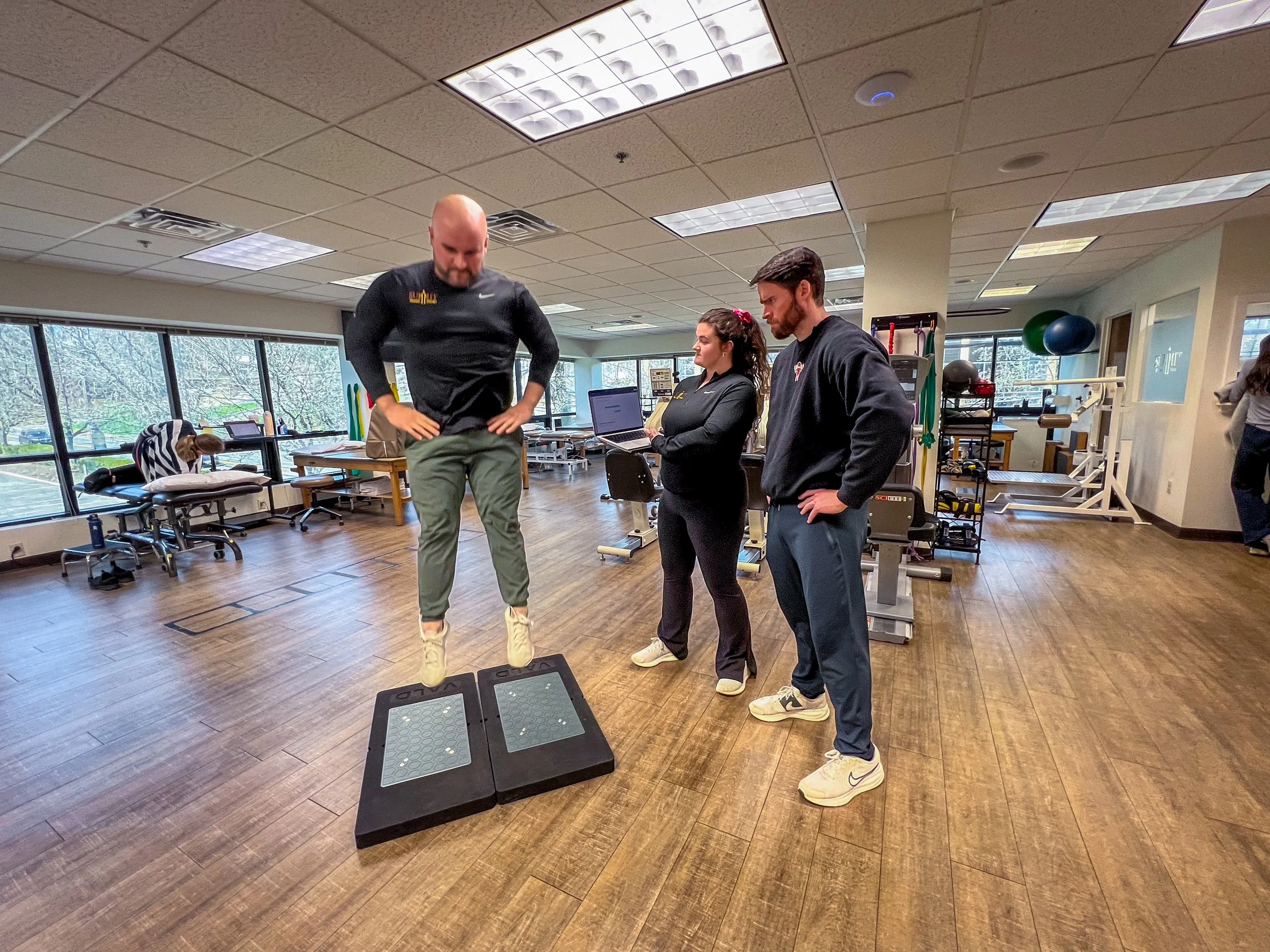
Learning how to read and interpret force plates data.
Great Mentorship Goes Beyond Treatment Techniques
Knowing exercises and manual therapy techniques is only one part of becoming an excellent physical therapist.
New clinicians also have to learn how to:
Perform an efficient examination
Determine what information is clinically meaningful
Explain a diagnosis without creating fear
Set realistic expectations
Get patients invested in their rehabilitation
Progress treatment appropriately
Recognize when the original plan isn't working
Communicate with physicians and other healthcare providers
Manage complex or uncertain cases
Help patients return to demanding activities
These skills are difficult to develop from continuing education courses alone.
They require feedback on real patients and real decisions.
Your First Job Should Make You More Valuable
Your first few years as a physical therapist should dramatically increase your value as a clinician.
You should become better at evaluating patients, solving difficult problems, communicating, managing a caseload, and producing better outcomes.
That development shouldn't be left entirely to chance.
A strong employer should provide the environment, feedback, technology, continuing education, and mentorship necessary to help talented clinicians improve.
That benefits everyone.
Better clinicians provide better care. Better care builds a stronger reputation. A stronger practice creates more opportunities for both the business and its employees.
What New Graduate PTs Should Ask During an Interview
If a clinic tells you it offers mentorship, ask for specifics.
How often do I meet with my mentor?
Is mentorship scheduled, or does it happen when there is free time?
Will I have dedicated one-on-one time?
Can we discuss my actual patients and clinical decisions?
Will someone observe my evaluations and treatments?
Will I receive feedback on my clinical reasoning?
Is mentorship protected when the clinic gets busy?
The answers will tell you much more than simply asking whether a mentorship program exists.
Mentorship at Summit Physical Therapy
At Summit Physical Therapy, we believe developing excellent clinicians requires deliberate investment.
Our new graduate mentorship program lasts 12 months and includes two hours of dedicated one-on-one mentorship each week with an Orthopedic Clinical Specialist (OCS), along with weekly educational programming and ongoing in-clinic mentorship.
The goal isn't to teach new therapists to practice exactly like their mentor.
It is to help them develop their own clinical reasoning, recognize patterns faster, become confident making difficult decisions, and ultimately become independent clinicians.
Because the goal of mentorship shouldn't be dependence on a mentor.
The goal is to eventually need them less.
Looking for a New Graduate Physical Therapy Job in New Jersey?
If you're a physical therapist looking for a clinic where mentorship and professional development are treated as part of the job—not something squeezed in when the schedule happens to allow it—we'd love to hear from you.
Summit Physical Therapy serves patients throughout Summit, Short Hills, Millburn, Maplewood, Chatham, Florham Park, New Providence, Springfield, and South Orange, New Jersey.
Contact Summit Physical Therapy to learn more about career opportunities and our new graduate physical therapy mentorship program.